Can Chess Actually Boost Exam Scores? Here's What Studies Show
By Lalit Akhade, Founder & Head Coach, ChessMates Academy · Published 2025-01-03 · 5 min read
Introduction: Can Chess Really Improve Exam Performance?
Every parent wants their child to succeed academically. With increasing competition and pressure, students need every advantage they can get. While traditional tutoring focuses on subject-specific knowledge, there's growing evidence that chess offers a different kind of preparation — one that builds the cognitive skills underlying all academic performance.
The question isn't whether chess is enjoyable or intellectually stimulating — that's obvious. The real question is: can chess actually help your child perform better on exams? The answer, supported by research and real-world results, is a resounding yes.
This comprehensive guide explores how chess improves exam performance, examining the cognitive mechanisms involved, reviewing scientific evidence, and providing practical strategies for using chess to boost your child's academic results.
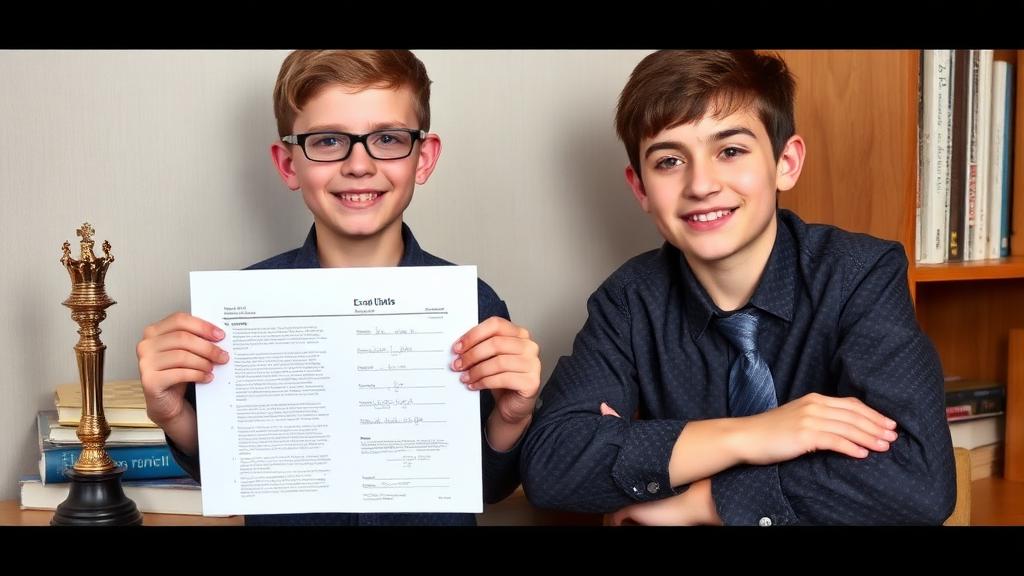
The Cognitive Skills That Drive Exam Success
What Makes Students Perform Well on Exams?
Exam success depends on multiple cognitive abilities:
- Working memory: Holding and manipulating information during problem-solving
- Attention and focus: Maintaining concentration throughout long tests
- Processing speed: Efficiently handling large amounts of information
- Logical reasoning: Drawing correct conclusions from given information
- Pattern recognition: Quickly identifying relevant structures and relationships
Chess systematically develops each of these abilities, creating a foundation for academic excellence.
The Transfer of Skills
While chess-specific skills might seem unrelated to biology or history, the underlying cognitive abilities transfer broadly:
- The concentration developed in chess applies to all subjects
- The logical reasoning used in chess strengthens mathematical thinking
- The pattern recognition practiced in chess improves reading comprehension
- The working memory exercised in chess supports learning in every domain
Research: Chess and Academic Performance
Key Studies on Chess and Exams
The New York Study: Students in chess programs showed an average improvement of 17.3% on standardized tests compared to non-chess students.
The German Study: Regular chess instruction correlated with significant improvements in mathematics performance, particularly in problem-solving sections.
The Indian Study: Chess-playing students consistently outperformed non-players on academic assessments across multiple subjects.
The Australian Study: Students in chess programs showed particular improvement in concentration-dependent tasks and multi-step problems.
Meta-Analysis Findings
A comprehensive meta-analysis of 24 studies found: - Consistent positive effects on mathematical ability - Significant improvements in reading comprehension - Enhanced cognitive abilities across multiple domains - Benefits that increased with duration of chess instruction
The evidence is clear: chess instruction improves academic performance.

How Chess Builds Exam-Ready Minds
Developing Sustained Concentration
Exams require extended focus — often for hours at a time. Many students struggle to maintain concentration throughout long tests, leading to careless errors and incomplete work.
Chess naturally builds sustained attention: - Games require continuous focus for extended periods - A single lapse in concentration can cost the game - Players learn to maintain mental alertness despite fatigue - The engaging nature of chess makes concentration practice enjoyable
Students who play chess regularly develop the attention stamina needed for exam success.
Strengthening Working Memory
Working memory — the ability to hold and manipulate information temporarily — is crucial for exam performance. Students must remember question details while working toward solutions.
Chess exercises working memory intensively: - Players hold multiple possible positions in mind - Calculation requires tracking several move sequences simultaneously - Game review involves remembering and analyzing past positions - Pattern recognition draws on stored memories during play
This regular exercise expands working memory capacity, benefiting all academic work.
Building Logical Reasoning
Exams across subjects test logical reasoning: - Mathematics: Solving multi-step problems - Science: Drawing conclusions from data - Reading: Making inferences from text - Writing: Constructing coherent arguments
Chess is logical reasoning in its purest form: - Every move must be justified by reasoning - Players constantly evaluate cause and effect - Errors in logic lead to immediate consequences - Success requires consistent, valid reasoning
The logical thinking developed in chess transfers directly to exam performance.
Enhancing Pattern Recognition
Pattern recognition allows students to quickly identify problem types and apply appropriate strategies. Strong pattern recognition means faster, more accurate exam completion.
Chess develops pattern recognition extensively: - Tactical patterns appear repeatedly across games - Opening patterns require recognition and response - Positional patterns guide strategic decisions - Endgame patterns determine correct technique
This trained pattern recognition helps students quickly understand exam questions and identify solution approaches.
Specific Exam Skills Developed Through Chess
Time Management Under Pressure
Timed games teach crucial time management: - Allocating time across different game phases - Deciding when to think deeply vs. move quickly - Maintaining quality while managing constraints - Adjusting strategy based on time remaining
These skills transfer directly to timed exams.
Handling Stress and Anxiety
Exam anxiety affects many students, reducing performance below their true ability. Chess helps manage academic pressure: - Regular competition normalizes high-stakes situations - Players learn to stay calm when facing challenges - Recovery from setbacks becomes natural - Confidence builds through repeated success
Students who play competitive chess often handle exam pressure better.
Error Detection and Correction
On exams, catching and correcting mistakes is crucial. Chess develops this ability: - Players learn to double-check calculations - Blunder awareness increases with experience - Self-critique becomes habitual - Finding improvements becomes second nature
These habits reduce careless errors on academic tests.
Reading Carefully and Following Instructions
Chess teaches careful attention to detail: - Missing a threat can lose the game - Every piece position matters - Small advantages accumulate to victory - Attention to opponent's moves is essential
This careful attention transfers to exam reading, reducing errors from misunderstood questions.
Subject-Specific Benefits
Mathematics
The chess-math connection is strongest: - Calculation practice improves arithmetic - Logical reasoning supports problem-solving - Pattern recognition aids geometry - Abstract thinking prepares for algebra
Students often see the largest exam improvements in mathematics.
Science
Scientific thinking parallels chess thinking: - Hypothesis testing mirrors move evaluation - Data analysis uses similar skills to position analysis - Systematic experimentation reflects chess methodology - Drawing conclusions requires the same logical reasoning
Chess players often excel in science examinations.
Language Arts
Perhaps surprisingly, chess benefits reading and writing: - Concentration improves reading comprehension - Analytical thinking strengthens essay structure - Attention to detail improves editing - Vocabulary develops through chess study
Many students show improved language arts performance after chess instruction.
Practical Strategies: Using Chess for Exam Success
Integrating Chess Into Study Routines
Optimal integration of chess with academic work:
Before studying: 15-20 minutes of chess puzzles as cognitive warm-up Study breaks: Brief chess activities to refresh focus After studying: Relaxing games to decompress while maintaining mental engagement Exam preparation: Increasing chess activities can reduce anxiety while maintaining mental sharpness
Timing and Intensity
Recommendations for exam periods: - Maintain regular chess practice rather than stopping entirely - Reduce competitive pressure during exam week - Use puzzles and casual games rather than intense training - Let chess provide balance rather than additional stress
Long-Term Development
For maximum exam benefits: - Begin chess instruction well before critical exam periods - Maintain consistent practice throughout the school year - Increase chess during summer to build skills without academic pressure - View chess as a long-term cognitive investment
Age-Appropriate Considerations
Elementary School Students
Focus on: - Building concentration through short games - Developing basic analytical habits - Creating positive associations with thinking - Having fun while building cognitive foundations
Middle School Students
Emphasize: - Systematic analysis approaches - Time management in competitive play - Self-evaluation and improvement - Connecting chess thinking to academic work
High School Students
Develop: - Advanced analytical capabilities - Sophisticated time and stress management - Independent learning abilities - Strategic planning for long-term goals
How Chessmates.in Supports Academic Success
Our programs are designed with academic benefits in mind:
- Cognitive skill development: Explicit focus on transferable thinking abilities
- Structured progression: Building skills systematically over time
- Balanced approach: Challenging without adding stress
- Parent communication: Helping families maximize benefits
- Flexible scheduling: Accommodating academic priorities
We understand that chess should support, not compete with, academic success.
FAQs About Chess and Exam Performance
1. How soon before exams should my child start chess? Benefits increase with longer practice, but even a few months of instruction shows improvement. Starting early is best, but it's never too late.
2. Will chess take time away from studying? When properly balanced, chess enhances study efficiency enough to offset time invested. The cognitive benefits make remaining study time more productive.
3. Which subjects benefit most from chess? Mathematics shows the largest gains, followed by science. Reading and writing also improve, particularly for students who struggle with concentration.
4. How much chess is needed to see exam improvements? Most studies show benefits from 2-3 sessions weekly. More intensive practice may produce greater gains but should be balanced with academic work.
5. Can chess help with test anxiety? Yes! Regular competitive chess normalizes pressure situations and builds coping strategies that reduce exam anxiety.
Conclusion: Chess as Academic Preparation
The evidence is compelling: chess improves exam performance. By developing concentration, working memory, logical reasoning, and pattern recognition, chess builds the cognitive foundation that underlies success in all academic subjects.
Unlike subject-specific tutoring, chess provides benefits that transfer across the entire curriculum. The time invested in chess pays dividends in every class, on every test, throughout a student's academic career.
At Chessmates.in, we help students develop the cognitive skills they need for academic excellence. Our structured programs, expert instruction, and proven methods make chess an effective complement to traditional education.
Give your child the academic advantage of chess. The investment in their thinking skills will pay dividends throughout their educational journey and beyond.