How Chess Makes Kids Better Problem Solvers (In Just 3 Months)
By Lalit Akhade, Founder & Head Coach, ChessMates Academy · Published 2025-01-06 · 7 min read
Introduction: Where Critical Thinking Meets the 64 Squares
In today's information-rich world, critical thinking has become one of the most valuable skills a child can develop. The ability to analyze information, evaluate options, and make reasoned decisions separates successful students from those who struggle. Chess, with its emphasis on logical analysis and strategic evaluation, naturally builds these essential critical thinking skills.
Every chess game presents players with complex problems requiring careful thought. There are no shortcuts, no lucky guesses — only the quality of one's reasoning determines success. This makes chess perhaps the purest training ground for critical thinking available to children today.
This comprehensive guide explores how chess develops critical thinking abilities and why this ancient game remains one of the most effective tools for cognitive development in the modern world.
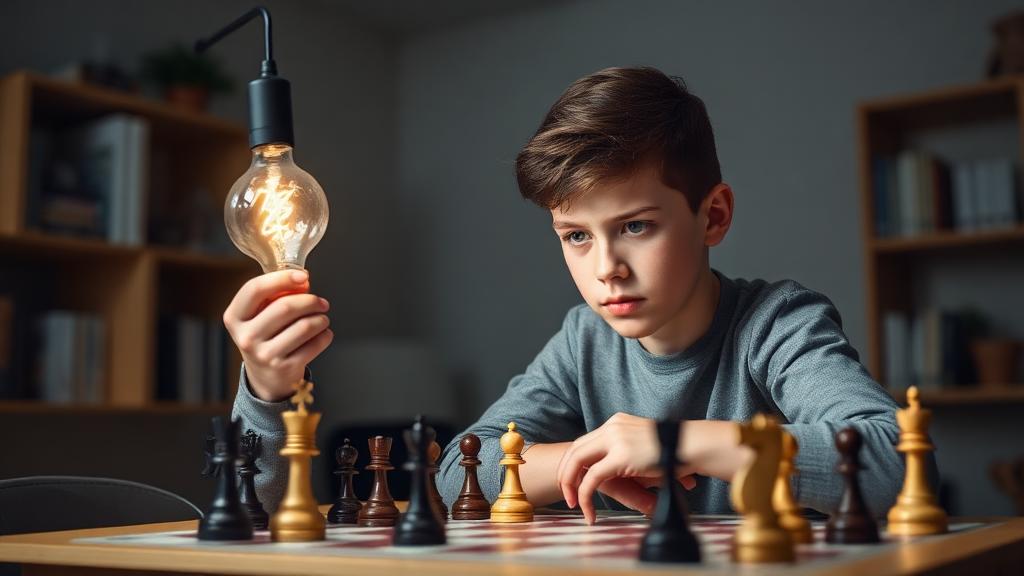
Understanding Critical Thinking
What Is Critical Thinking?
Critical thinking encompasses multiple cognitive skills:
- Analysis: Breaking down complex problems into components
- Evaluation: Assessing the quality and relevance of information
- Inference: Drawing logical conclusions from available data
- Explanation: Articulating reasoning clearly
- Self-regulation: Monitoring and correcting one's own thinking
These skills are essential for academic success, career achievement, and effective daily decision-making.
Why Critical Thinking Matters for Children
Children face increasing complexity in their world:
- More information to process than any previous generation
- Decisions with longer-term consequences
- Problems requiring nuanced understanding
- Need to distinguish reliable from unreliable sources
Critical thinking provides the tools to navigate this complexity successfully.
How Chess Develops Critical Thinking
Analysis Through Position Evaluation
Every chess position requires systematic analysis. Players must examine:
- Material balance: What pieces does each side have?
- Piece activity: How effectively are pieces placed?
- King safety: Are the kings secure or vulnerable?
- Pawn structure: What long-term factors affect the position?
- Tactical opportunities: What immediate threats exist?
This methodical approach to analysis transfers directly to academic and real-world problems.
Evaluation Through Decision-Making
Chess constantly demands evaluation:
- Which move is best among several options?
- What are the trade-offs of different strategies?
- How do short-term gains compare to long-term goals?
- When should calculated risks be taken?
Players develop sophisticated evaluation skills that apply far beyond the chessboard.
Inference Through Calculation
Chess calculation is pure inference:
"If I move here, my opponent's best response is there, which allows me to play this, resulting in..."
This if-then reasoning — the foundation of logical inference — becomes second nature to chess players.
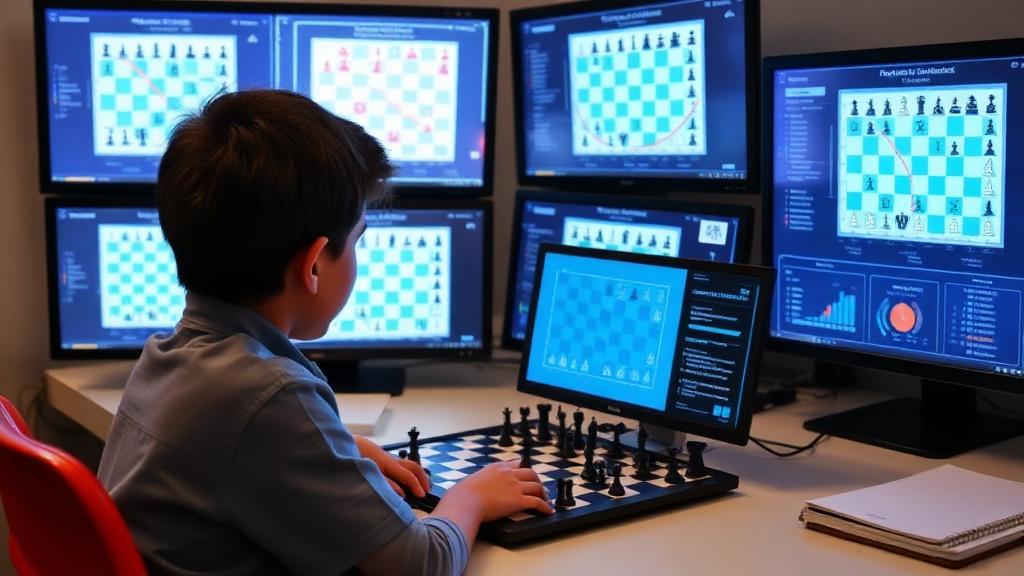
The Critical Thinking Process in Chess
Step 1: Identify the Problem
Before moving, strong players ask: - What is the current situation? - What challenges do I face? - What opportunities exist? - What does my opponent want to do?
This problem identification mirrors critical thinking in any domain.
Step 2: Gather Information
Players collect relevant information: - What are all the legal moves? - What threats exist on the board? - What are the piece values involved? - What is the history of the game (previous moves)?
Distinguishing relevant from irrelevant information is crucial.
Step 3: Generate Options
Creative thinking produces candidates: - What are the most forcing moves? - What quiet improvements are possible? - What defensive moves are necessary? - What unexpected moves might surprise?
Good critical thinkers generate multiple options before choosing.
Step 4: Evaluate Consequences
Each option is analyzed: - What are the likely responses? - What are the best and worst outcomes? - What is the probability of success? - How does this fit the overall strategy?
This consequential thinking develops naturally through chess.
Step 5: Make and Justify a Decision
Finally, players choose and commit: - Select the best move based on analysis - Understand and articulate the reasoning - Accept responsibility for the decision - Learn from the outcomes
This complete cycle repeats for every move.
Scientific Evidence: Chess and Critical Thinking
Research Findings
Studies consistently support the chess-critical thinking connection:
Ferguson (1995): Students in chess programs showed significant gains in critical thinking skills compared to control groups, particularly in analysis and evaluation.
Margulies (1991): Chess instruction improved reading comprehension through enhanced analytical abilities.
Christiaen & Verhofstadt (1978): Belgian study found chess players developed superior planning and evaluation capabilities.
Cognitive Mechanisms
Neuroscience explains these improvements:
- Prefrontal cortex activation: Chess exercises brain regions responsible for planning and analysis
- Pattern recognition development: Regular practice improves information processing
- Working memory enhancement: Holding multiple possibilities improves cognitive capacity
- Metacognitive awareness: Players develop insight into their own thinking
Chess Tactics and Critical Thinking
Tactical Patterns as Thinking Frameworks
Chess tactics provide templates for critical thinking:
The Fork: Attacking two targets simultaneously teaches consideration of multiple objectives
The Pin: Immobilizing pieces illustrates how constraints affect decision-making
The Skewer: Understanding how context reverses situations develops flexible thinking
Discovered Attack: Recognizing hidden threats builds awareness of non-obvious factors
Decoys and Deflection: Understanding misdirection develops analytical skepticism
Problem-Solving Through Puzzles
Chess puzzles are concentrated critical thinking exercises:
- Clear problems with definite solutions
- Require systematic analysis
- Reward accurate evaluation
- Provide immediate feedback
- Build confidence through success
Regular puzzle practice builds critical thinking habits that transfer to other domains.
Developing Critical Thinking at Different Ages
Early Childhood (5-7 years)
Young children develop foundational skills: - Basic cause-and-effect understanding - Simple pattern recognition - Beginning analytical vocabulary - Comfort with problem-solving
Chess instruction at this age should emphasize exploration and discovery.
Middle Childhood (8-10 years)
Children can engage with more complex analysis: - Multi-step reasoning - Comparing alternatives - Articulating thinking - Learning from mistakes
Structured instruction becomes increasingly valuable.
Adolescence (11+ years)
Teenagers develop advanced capabilities: - Abstract reasoning - Strategic planning - Self-directed analysis - Independent problem-solving
Chess can challenge and develop sophisticated thinking at this level.
Chess vs. Other Critical Thinking Activities
Unique Advantages of Chess
While many activities develop thinking skills, chess offers unique benefits:
Complete information: Unlike many games, nothing is hidden in chess, making pure reasoning possible
No luck element: Success depends entirely on thinking quality
Immediate feedback: Every move has consequences that reveal thinking quality
Universal standards: Ratings and competitions provide objective measurement
Cultural richness: Centuries of accumulated wisdom provide depth
Complementary Activities
Chess works well alongside: - Mathematics puzzles and competitions - Debate and discussion activities - Science experiments and analysis - Strategic video games (with appropriate limits)
Together, these activities build robust critical thinking abilities.
Teaching Critical Thinking Through Chess
Explicit Instruction
The best chess education explicitly develops thinking skills:
- Think-aloud protocols: Students verbalize their reasoning
- Analysis discussions: Groups examine positions together
- Mistake analysis: Errors become learning opportunities
- Process emphasis: How you think matters as much as what you choose
Questions That Develop Thinking
Parents and coaches can ask:
- "What are you considering?"
- "What would happen if...?"
- "Why do you think your opponent made that move?"
- "What would you do differently next time?"
- "Can you find a better move?"
These questions build metacognitive awareness.
Real-World Applications of Chess Thinking
Academic Success
Critical thinking from chess improves: - Test-taking strategies - Essay analysis and construction - Scientific reasoning - Mathematical problem-solving - Research evaluation
Life Skills
Beyond academics, chess thinking helps with: - Financial decision-making - Career planning - Relationship navigation - Health choices - Time management
The analytical habits developed in chess become life skills.
How Chessmates.in Develops Critical Thinking
Our approach specifically targets critical thinking development:
- Structured analysis frameworks: Students learn systematic approaches
- Discussion-based learning: Thinking is verbalized and refined
- Progressive challenge: Problems increase in complexity appropriately
- Feedback and reflection: Mistakes become learning opportunities
- Transfer emphasis: Connections to other domains are explicitly made
Our certified instructors understand how to develop thinking skills, not just chess knowledge.
FAQs About Chess and Critical Thinking
1. How quickly will my child develop critical thinking through chess? Improvements typically appear within 3-6 months of regular practice, though development continues throughout one's chess journey.
2. Can chess help children who struggle with critical thinking? Yes! Chess provides a structured, engaging context for developing analytical skills that may seem abstract otherwise.
3. Is critical thinking from chess measurable? Yes — standardized critical thinking assessments show improvements in chess players, and chess ratings themselves reflect analytical ability.
4. Do I need to play chess myself to help my child? No — asking questions and showing interest in their thinking is more valuable than chess expertise.
5. How much chess is needed for critical thinking benefits? Even modest practice (2-3 sessions weekly) produces benefits, with more intensive study producing greater gains.
Conclusion: Chess as a Critical Thinking Laboratory
Chess provides perhaps the ideal environment for developing critical thinking. Every game presents complex problems requiring analysis, evaluation, and reasoned decision-making. Unlike many educational activities, chess is intrinsically motivating — children want to improve because the game itself is engaging.
The critical thinking skills developed through chess — analysis, evaluation, inference, and self-regulation — are exactly what children need to succeed in an increasingly complex world. These skills transfer to academic performance, career success, and daily decision-making.
At Chessmates.in, we harness the power of chess to develop critical thinkers. Our structured programs, expert instruction, and proven methods help children build the cognitive skills they need for success in all areas of life.
Give your child the gift of critical thinking through chess. The 64 squares are waiting.