Why Chess Puzzles Train Kids' Brains Faster Than Lessons
By Lalit Akhade, Founder & Head Coach, ChessMates Academy · Published 2024-11-29 · 7 min read
Introduction: The Power of Chess Puzzles
Chess puzzles are the secret weapon of improving players worldwide. These tactical exercises — positions where one side has a winning combination — train pattern recognition, calculation ability, and the tactical vision needed to succeed in actual games.
For children learning chess, puzzles offer an engaging, game-like way to develop crucial skills. They're challenging enough to require thought but short enough to maintain attention, providing the perfect balance for young minds.
This comprehensive guide explores how parents can leverage chess puzzles and tactical training to accelerate their child's chess development, covering puzzle types, training methods, and recommended resources for every level.
Why Puzzles Are Essential for Chess Improvement
The Science of Pattern Recognition
Chess masters don't calculate more moves than amateurs — they recognize patterns faster. This pattern recognition comes from exposure to thousands of tactical positions, and puzzles provide exactly that exposure.
How Pattern Recognition Develops: - Repeated exposure to tactical themes creates mental templates - Brain learns to instantly recognize winning opportunities - Recognition becomes subconscious over time - Calculation becomes faster as patterns click into place
Studies show that puzzle training is one of the most efficient ways to improve chess performance, particularly for beginners and intermediate players where tactical opportunities decide most games.
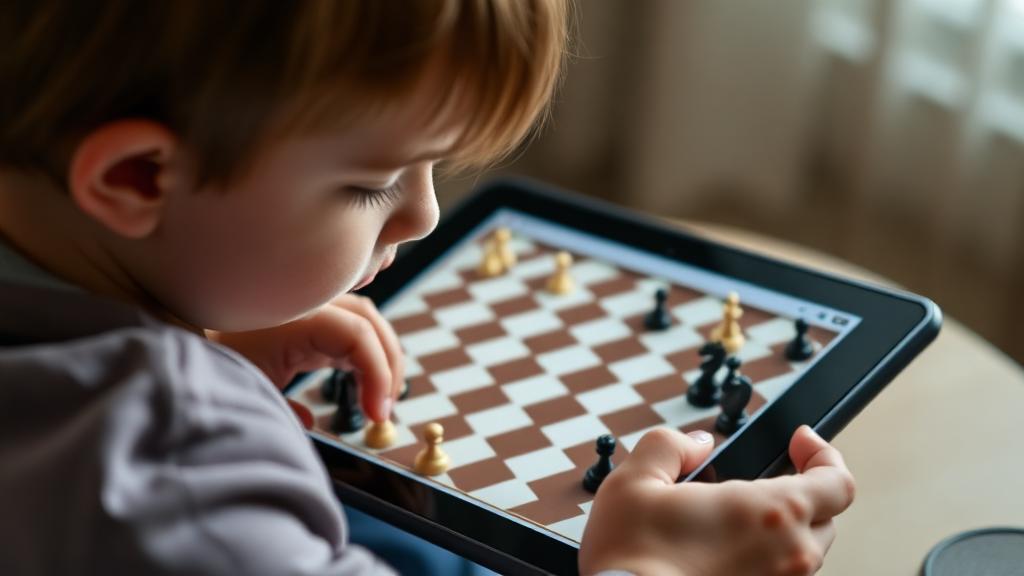
Immediate Feedback and Motivation
Unlike games where success depends on opponent quality and many factors, puzzles provide immediate, objective feedback. This creates a powerful learning loop:
- Attempt puzzle
- Receive instant feedback (correct/incorrect)
- Learn the solution if incorrect
- Apply pattern in future puzzles and games
For children, this immediate feedback is particularly motivating. They can see themselves improving through solving accuracy and puzzle ratings.
Transferable Skills
Puzzle solving develops skills that transfer beyond chess: - Problem-solving approach: Systematic analysis of complex situations - Pattern recognition: Seeing relationships and connections - Calculation ability: Thinking through sequences logically - Patience: Thinking before acting - Resilience: Learning from mistakes
Types of Chess Puzzles
Tactical Puzzles by Theme
Forks: One piece attacks two or more enemy pieces simultaneously - Examples: Knight forks (family fork), queen forks, pawn forks - Difficulty: Beginner-friendly, essential foundation
Pins: An attacking piece immobilizes a defending piece that shields a more valuable piece - Examples: Absolute pins (to king), relative pins - Difficulty: Beginner to intermediate
Skewers: Reverse of a pin — more valuable piece forced to move, exposing less valuable piece - Examples: Bishop and queen skewers along diagonals - Difficulty: Intermediate
Discovered Attacks: Moving one piece reveals an attack from another - Examples: Discovered check, double check - Difficulty: Intermediate (concept easy, execution varies)
Deflection: Forcing a defensive piece away from its protective duty - Examples: Sacrifices to remove defenders - Difficulty: Intermediate to advanced
Decoy: Luring a piece to a vulnerable square - Examples: Sacrifices that force enemy pieces into traps - Difficulty: Intermediate to advanced
Back Rank Patterns: Checkmate threats exploiting weak back rank - Examples: Back rank mate, weak back rank tactics - Difficulty: Intermediate
Puzzle Types by Objective
Checkmate Puzzles: Find the sequence that delivers checkmate - Mate in 1: Beginners - Mate in 2: Intermediate beginners - Mate in 3+: Advancing players
Winning Material: Find the combination that wins pieces - Most common puzzle type - Teaches practical winning technique
Defensive Puzzles: Find the only move that saves the position - Less common but valuable for practical play - Teaches defensive awareness
Endgame Studies: Positions with unique solutions requiring precise play - More advanced - Develops calculation and endgame understanding
Puzzle Training Methods for Children
Daily Puzzle Routine
Consistency matters more than volume. A daily puzzle habit builds pattern recognition gradually but reliably.
Recommended Daily Quantities by Level: - Complete Beginners (0-600 rating): 5-10 puzzles - Beginners (600-1000): 10-15 puzzles - Intermediate (1000-1400): 15-25 puzzles - Advanced (1400+): 25-50 puzzles
Quality Over Quantity Guidelines: - Take time to solve puzzles correctly, not quickly - Don't guess — think through the solution - Review incorrect puzzles to understand why - Focus on puzzles at appropriate difficulty level
The "Don't Move Until You See It" Method
This classical training method develops calculation ability and prevents guessing.
The Process: 1. View the puzzle position 2. Calculate the entire solution in your head 3. Only input moves when you see the complete winning line 4. If stuck, keep thinking — resist the urge to try moves
Benefits: - Develops visualization ability - Prevents pattern-matching shortcuts - Builds mental discipline - Simulates actual game conditions
Age Considerations: - Very young children (5-7) may need more flexible approach - Ages 8+ can begin developing this discipline - Full application typically appropriate for ages 10+
Themed Training Sessions
Periodically focus on specific tactical themes to deepen understanding.
Weekly Theme Focus Example: - Week 1: Forks (especially knight forks) - Week 2: Pins and skewers - Week 3: Back rank tactics - Week 4: Discovered attacks
How to Implement Themed Training: - Use puzzle platforms with theme filters - Solve 20-30 puzzles of single theme - Watch video instruction on the theme - Practice recognizing theme in actual games
Speed vs. Accuracy Training
Both approaches have value for different purposes.
Accuracy-Focused Training: - Take unlimited time per puzzle - Goal: 85%+ solving accuracy - Best for developing deep calculation - Primary mode for beginners
Speed Training (Puzzle Rush/Survival): - Rapid solving under time pressure - Goal: Quantity within time limit - Best for reinforcing known patterns - Secondary mode, after accuracy is established
Recommended Balance: - 70-80% accuracy-focused training - 20-30% speed training (for variety and pattern reinforcement)
Progress Tracking and Measurement
Key Metrics to Monitor
Puzzle Rating: Most platforms assign ratings that reflect difficulty level you can solve consistently - More useful than game rating for measuring tactical improvement - Should trend upward over months of training
Solving Accuracy: Percentage of puzzles solved correctly - Aim for 75-85% accuracy - If accuracy falls below 60%, puzzles may be too difficult - If accuracy exceeds 90%, increase difficulty
Themes Performance: Identify strong and weak tactical areas - Focus extra training on weak themes - Leverage strengths in game play
Setting Puzzle Goals
Short-Term Goals (Weekly): - "Solve 100 puzzles this week" - "Achieve 80% accuracy on fork puzzles" - "Complete puzzle rush challenge daily"
Medium-Term Goals (Monthly): - "Increase puzzle rating by 100 points" - "Master all basic checkmate patterns" - "Complete themed training on pins"
Long-Term Goals (Seasonal): - "Reach puzzle rating of 1500" - "Develop consistent 85% solving accuracy" - "Solve mate-in-3 puzzles reliably"
Celebrating Progress
Recognizing improvement keeps children motivated: - Celebrate rating milestones - Acknowledge improved accuracy - Note when new patterns are recognized in games - Track longest puzzle streaks - Share achievements with family/coach
Recommended Puzzle Resources
Digital Platforms
Lichess (Free): - Unlimited free puzzles with adaptive difficulty - Puzzle storm for speed training - Theme filtering available - No ads on children's content - Excellent for daily training
Chess.com (Freemium): - Puzzle rush mode highly engaging for children - Rated puzzles with good difficulty matching - Theme lessons with puzzles - Free tier allows 3 puzzles daily; premium unlimited
ChessKid (Subscription): - Designed specifically for children - Safe environment with moderation - Puzzles integrated with lessons - Progress tracking for parents
Physical Puzzle Books
For Beginners: - "Chess Tactics for Champions" by Susan Polgar - "Winning Chess Puzzles for Kids" by Jeff Coakley - "1001 Chess Exercises for Beginners" by Franco Masetti
For Intermediate Students: - "1001 Winning Chess Sacrifices and Combinations" by Fred Reinfeld - "Tactics Time" series by Tim Brennan - "Chess Tactics for Students" by John Bain
Benefits of Physical Books: - No screen time concerns - Portable for travel - Require visualization (no moving pieces) - Complement digital training
Puzzle Apps
Tactics Trainer Apps: Most chess apps include puzzle features Dedicated Puzzle Apps: Magnus Trainer, Tactics Frenzy Educational Apps: ChessKid, Dinosaur Chess (young children)
Integrating Puzzles With Overall Training
Puzzle Placement in Daily Practice
Puzzles work best at specific times:
Beginning of Practice Session: - Warms up tactical thinking - Gets mind in "chess mode" - 10-15 minutes of puzzles before games
After Lessons: - Reinforces concepts learned - Applies new patterns immediately - Theme-based puzzles matching lesson content
During Downtime: - Waiting rooms, car rides - Short puzzle sessions on mobile - Keeps chess engagement consistent
Connecting Puzzles to Games
The goal of puzzle training is improved game performance. Make connections explicit:
Before Games: Quick puzzle warm-up activates tactical awareness During Analysis: Identify moments where tactical patterns appeared After Games: Note when puzzle patterns were (or should have been) applied
Creating Your Own Puzzles: Have children create puzzles from their game positions — excellent for understanding tactical opportunities
Common Puzzle Training Mistakes
Mistake 1: Solving Too Quickly
The Problem: Children rush through puzzles without proper calculation, developing pattern-matching shortcuts that fail in games.
The Solution: Enforce minimum thinking time per puzzle. Quality over quantity always.
Mistake 2: Wrong Difficulty Level
The Problem: Puzzles too easy reinforce nothing new; puzzles too hard cause frustration without learning.
The Solution: Target 75-85% accuracy. Adjust difficulty if accuracy falls outside this range.
Mistake 3: Ignoring Incorrect Solutions
The Problem: Moving on without understanding correct solutions wastes learning opportunities.
The Solution: Spend time reviewing every incorrect puzzle. Understand why the correct move works.
Mistake 4: Only One Puzzle Type
The Problem: Overemphasis on favorite themes (usually checkmates) while neglecting others.
The Solution: Rotate through all tactical themes. Focus extra time on weak areas.
Mistake 5: Substituting Puzzles for Games
The Problem: Some children prefer puzzles to games, avoiding the challenge of complete games.
The Solution: Balance puzzle training with actual gameplay. Both are necessary.
How Chessmates.in Integrates Puzzle Training
Our program builds tactical training into comprehensive development:
Lesson Integration: Tactical themes taught in lessons with puzzle practice Homework Assignments: Personalized puzzle homework matching current learning Progress Monitoring: Coaches track puzzle performance alongside game improvement Themed Training: Systematic coverage of all major tactical patterns Competition Elements: Puzzle challenges and competitions for motivation
FAQs About Chess Puzzles and Tactical Training
1. How many puzzles should my child solve daily? Start with 10-15 daily, adjusting based on attention and accuracy. Quality matters more than quantity.
2. What if my child gets frustrated with puzzles? Reduce difficulty until accuracy improves. Frustration often signals puzzles are too hard.
3. Should puzzles replace regular chess games? No — puzzles supplement games but don't replace them. Both are essential for balanced development.
4. How do I know if puzzle training is working? Track puzzle rating over time and observe tactical awareness in games. Both should improve.
5. Are paid puzzle platforms worth it? Lichess offers excellent free training. Paid platforms add convenience features but aren't necessary for improvement.
Conclusion: Puzzles as the Path to Tactical Mastery
Chess puzzles represent one of the most effective and efficient training methods available, particularly for developing players. Through consistent, well-structured puzzle training, children develop the tactical vision and calculation skills that form the foundation of chess strength.
At Chessmates.in, we integrate puzzle training into our comprehensive curriculum, ensuring that every student develops tactical abilities appropriate to their level. Our coaches guide puzzle selection, monitor progress, and connect puzzle patterns to real game situations.
Ready to sharpen your child's tactical skills? Book a trial lesson and experience how structured training accelerates chess improvement while keeping learning fun and engaging.