Started Chess Late? Why It's Not Too Late to Win
By Lalit Akhade, Founder & Head Coach, ChessMates Academy · Published 2024-11-17 · 6 min read
Introduction: It's Never Too Late
A common misconception in chess is that if a child hasn't started by age 5 or 6, they've already missed their window for serious development. This belief causes many parents to hesitate, wondering if it's "worth" starting their older child in chess.
The truth? While very early starters have certain advantages, late starters have their own unique strengths, and success in chess is absolutely achievable regardless of starting age. This guide explores realistic expectations for late starters, strategies for accelerated development, and how to leverage the advantages that come with starting at an older age.
Defining "Late Start" in Chess Context
What Qualifies as Late?
In competitive chess circles, "late starter" typically means: - Starting after age 10-12 for serious competitive play - Starting in teenage years for any level of play - Beginning as adult learner (parents learning alongside children)
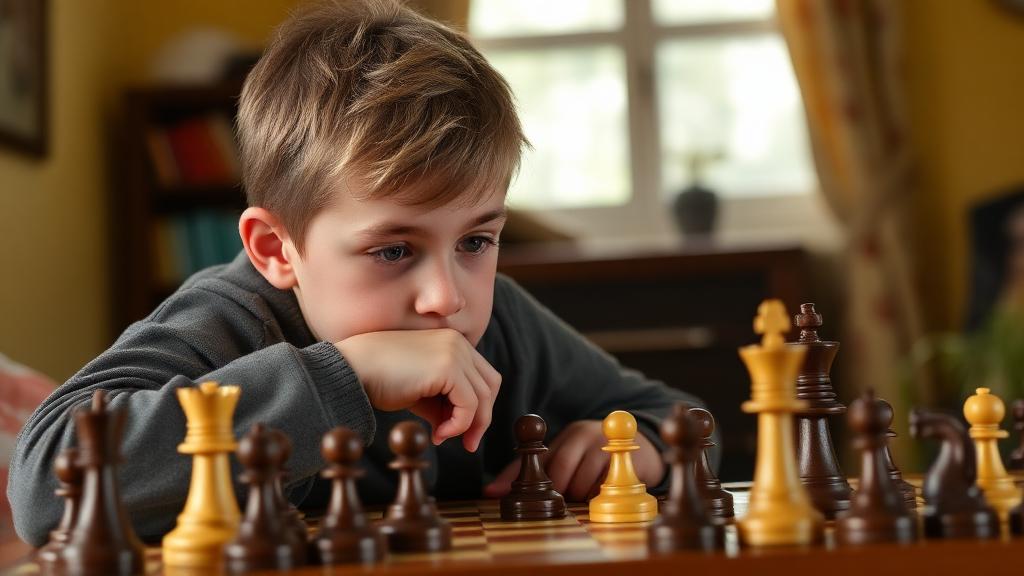
Why the Early Start Myth Persists
Professional Elite Bias: Most elite grandmasters started very young (ages 4-7), creating an impression that early start is required.
The Reality: - Professional elite represents tiny fraction of players - Vast majority of enjoyable, successful chess happens below elite level - Club-level excellence is absolutely achievable for late starters - Life benefits from chess don't require professional-level play
What Late Starters Actually Face
Genuine Challenges: - Less time for skill accumulation before competing with experienced peers - Fewer years of pattern exposure - Often busier schedules with competing activities
Offsetting Advantages: - Greater initial cognitive development - Better study habits and learning skills - Stronger focus and attention capacity - More efficient learning per hour invested - Often higher motivation and intentionality
Advantages of Starting Later
Cognitive Development
Mature Brain Benefits:
Better Abstract Reasoning: Older children understand abstract concepts faster than young beginners.
Longer Attention Span: Can engage in longer study sessions and deeper analysis.
Superior Memory Consolidation: More efficient integration of learning into long-term memory.
Meta-Cognition: Ability to think about their own thinking, accelerating improvement.
Learning Efficiency
Faster Initial Progress: - Grasps rules and basic concepts quickly - Understands explanations without extensive simplification - Can read chess books and notation immediately - Handles complexity that young children can't process
Self-Directed Learning Capability: - Can practice independently more effectively - Better at following structured study plans - Able to analyze own games meaningfully - More efficient use of chess resources
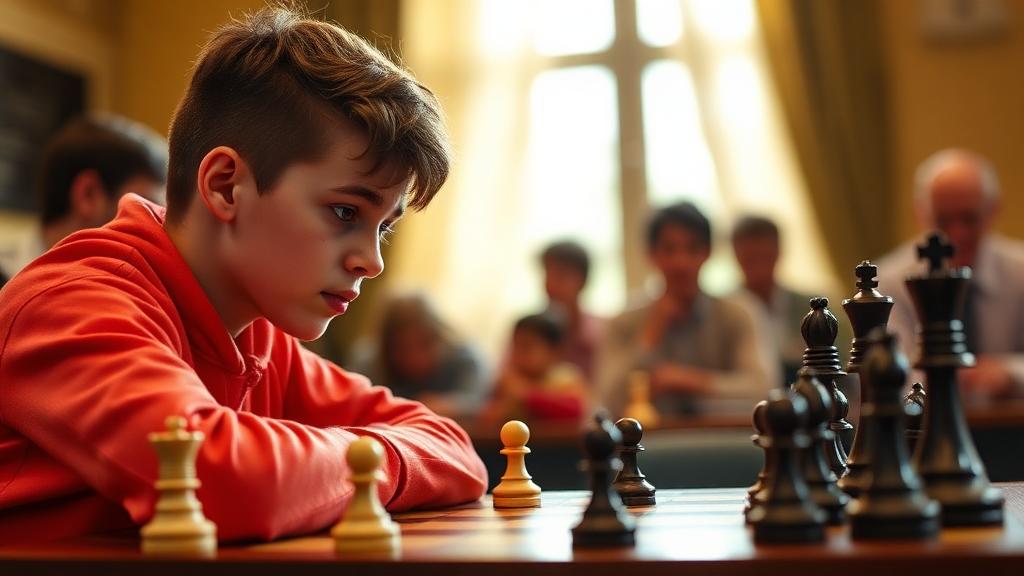
Motivation Factors
Intentional Choice: - Often more personally motivated (not just parent-driven) - Clearer goals and expectations - Greater commitment to practice - More resilient through challenges
Mature Perspective: - Handles wins and losses with perspective - Understands long-term improvement process - Less likely to burn out from pressure - Can balance chess with other life priorities
Realistic Expectations for Late Starters
Achievement Potential by Starting Age
Starting Ages 10-12: - Competitive club-level play achievable - National-level competition possible with dedication - Expert/Master titles achievable (with serious commitment) - Full benefit of chess's cognitive advantages
Starting Ages 13-15: - Strong club-level play achievable - Regional competition success possible - 1800-2000+ rating achievable (serious students) - All personal benefits of chess available
Starting Ages 16+: - Solid club-level play achievable - Significant improvement absolutely possible - 1600-1800+ rating realistic (dedicated practice) - Lifelong enjoyment and cognitive benefits
What's Probably Not Achievable
Being honest about limitations helps set appropriate goals:
Professional/Elite Level: World-class play requires many more years of development than late starters typically have available. This is true of essentially all demanding skills, not just chess.
However: 99.9% of chess enjoyment happens below elite level. Professional chess is extraordinarily rare regardless of starting age.
Strategies for Accelerated Development
Efficient Learning Approaches
Focus on Fundamentals: - Master basic principles thoroughly before moving on - Build solid foundation rather than rushing ahead - Return to fundamentals periodically
High-Quality Instruction: - Professional coaching accelerates development significantly - Avoid self-teaching errors that require later correction - Structured curriculum prevents gaps
Deliberate Practice: - Focus practice on weaknesses, not strengths - Analyze every serious game thoroughly - Solve puzzles at challenging (not comfortable) level - Study with specific goals in mind
Time Investment Guidelines
For Meaningful Improvement: - Minimum 5-7 hours weekly for noticeable progress - 10-15 hours weekly for faster development - Consistency matters more than sporadic intensity
Quality Time Distribution: - 30-40% tactical training (puzzles) - 25-30% playing games - 15-20% study (openings, endgames, strategy) - 15-20% analysis of own games
Leveraging Strengths
Capitalize on Maturity: - Use reading ability for book study - Apply academic discipline to chess study - Employ analytical skills in game analysis - Use life experience for emotional management
Strategic Advantages: - Can understand strategic concepts earlier - Better positional understanding from start - More patient, longer-term thinking - Handles complexity without overwhelm
Common Late Starter Challenges
Catching Up With Early Starters
The Reality: - You may not catch up to the most dedicated early starters - You can absolutely reach impressive levels - Competition exists at every rating level - Most chess enjoyment doesn't require being "the best"
Healthy Perspective: - Compare yourself to yourself, not others - Measure progress in skill development - Focus on improvement rate, not absolute level - Set personal goals, not comparative ones
Competition Age Gaps
The Challenge: Competing in age groups with players having years more experience.
Strategies: - Enter open sections based on rating, not age - Seek tournaments with appropriate sections - View stronger opponents as learning opportunities - Focus on personal improvement, not placement
Time Pressures
Multiple Commitments: Older children often have more competing demands.
Solutions: - Efficient practice prioritizing high-impact activities - Integrated practice (puzzles during downtime) - Realistic scheduling expectations - Quality over quantity emphasis
Success Stories of Late Starters
Famous Examples
Curt Hansen: Started at 15, became World Junior Champion and Grandmaster Yifan Hou: While starting younger, compressed development shows acceleration is possible Countless club players: Started as teens or adults, achieved meaningful chess success
What Success Stories Share
Common Factors: - Intense motivation and love for the game - Quality coaching and guidance - Efficient, focused practice - Persistence through challenges - Realistic but ambitious goals
How Chessmates.in Supports Late Starters
Our program accommodates late starters effectively:
Appropriate Curriculum: Placement based on ability, not age Efficient Instruction: Maximize learning per hour invested Flexible Scheduling: Accommodating busy teen schedules Personalized Approach: Tailored to individual strengths and needs Appropriate Expectations: Realistic goal-setting for each student Peer Matching: Connection with similar-level players regardless of age
FAQs About Late Starters in Chess
1. Is my 12-year-old really too old to start chess? Absolutely not — 12 is an excellent age to begin, with many advantages for efficient learning.
2. Can late starters become grandmasters? Possible but extremely rare (as it is for any starting age). Master-level chess is achievable for dedicated late starters.
3. Should late starters train differently? More efficient, focused training leveraging mature learning abilities. Same core activities, better execution.
4. How do I handle competing against younger players? Focus on your game, not opponents' ages. Every player started somewhere; respect all players equally.
5. What if my child gets frustrated by slower progress than younger peers? Reframe comparison — compare against their own past, not others. Celebrate their own improvement.
Conclusion: The Right Time Is Now
The best time to start chess was years ago. The second best time is now. Late starters bring unique advantages to chess learning and can achieve meaningful, satisfying success in the game regardless of when they begin.
At Chessmates.in, we welcome students at any age and design instruction to maximize their development potential. Our personalized approach ensures every student — regardless of starting age — receives appropriate challenges and support.
Ready to begin your chess journey? Book a trial lesson and discover that it's never too late to start.